

Kids + water + midday sun is a brutal combination. You can do sunscreen perfectly and still miss spots, still forget a reapplication, still deal with reflections bouncing UV right back into their faces. A sun-safe swim hat fixes a chunk of that problem by being a physical barrier that doesn’t “wear off” every two hours.
And honestly? If you only upgrade one thing in a child’s summer kit, I’d argue it should be the hat.
Hot take: if a kids’ sun hat doesn’t cover the neck, it’s basically half a hat.
Yes, I said it. Most little ones get burned on the ears and the back of the neck because those areas are easy to ignore and hard to keep coated, especially when they’re in and out of water. A wide brim or a legionnaire flap isn’t a fashion choice; it’s coverage where kids actually need it. For truly splash-proof coverage, check out these kids hats you can wear in the water.
One-line truth:
A hat is the only sun protection that keeps working while your child is busy forgetting about sun protection.
Skin and eyes aren’t separate problems
Friend-to-friend: the squinting at the pool is not just “bright day behavior.” Glare off water and sand is intense, and kids end up peering into it for hours. A brim creates shade over the eyes, reduces glare, and makes it easier for them to relax their face (which also means fewer complaints and fewer “I don’t wanna wear that!” moments).
Specialist mode for a second: UV exposure is cumulative. Childhood sunburns correlate with higher skin cancer risk later in life, and that’s not fearmongering, it’s what the epidemiology keeps pointing to. One clean stat to keep you anchored: having five or more sunburns can double melanoma risk, according to the Skin Cancer Foundation. Source: https://www.skincancer.org/risk-factors/sunburn/
So yeah, hat, sunscreen, shade. It’s not overkill; it’s layered defense.
UPF ratings, decoded (without the marketing fluff)
UPF is about fabric performance against UV. It’s tested, standardized, and far more useful than vague claims like “sun hat” or “UV protective.” For kids’ swim hats, UPF 50+ is the sweet spot. That rating means only about 1/50th of UV gets through the fabric, roughly 98% blocked under test conditions.
Here’s the thing, though: UPF isn’t magic. It can be compromised.
– Stretch can open the weave and reduce protection
– Wear and fading can change performance over time
– Wetness affects some fabrics more than others (varies by material and construction)
Now, this won’t apply to everyone, but if your child’s hat is getting daily use for a whole summer, I’d treat it like shoes: it will age, and you’ll probably replace it sooner than you think.
What actually works at the beach, pool, and sprinkler chaos
You don’t need ten hats. You need the right hat. Different settings punish gear in different ways.
Beach
Sand is abrasive, wind is constant, and shade is scarce. Go for wide brim (about 3 inches or more) or legionnaire style, and prioritize a chin strap that won’t chafe. If it flaps like a flag, the kid will yank it off.
Pool
Chlorine + repeated soaking. Look for quick-dry synthetics and stitching that doesn’t stiffen. In my experience, hats that stay heavy when wet end up abandoned on a towel within 20 minutes.
Playgrounds / camps
This is where comfort decides everything. Breathable panels help, but only if the rest of the hat still carries the UPF rating (some “mesh” inserts are basically sunscreen-dependency portals).
Fit and comfort: the boring part that determines success
If it pinches, they won’t wear it. If it slips into their eyes, they’ll throw it. If the seam rubs, you’ll hear about it immediately.
A genuinely wearable kids’ swim hat usually has:
– Soft, smooth seams (no scratchy interior binding)
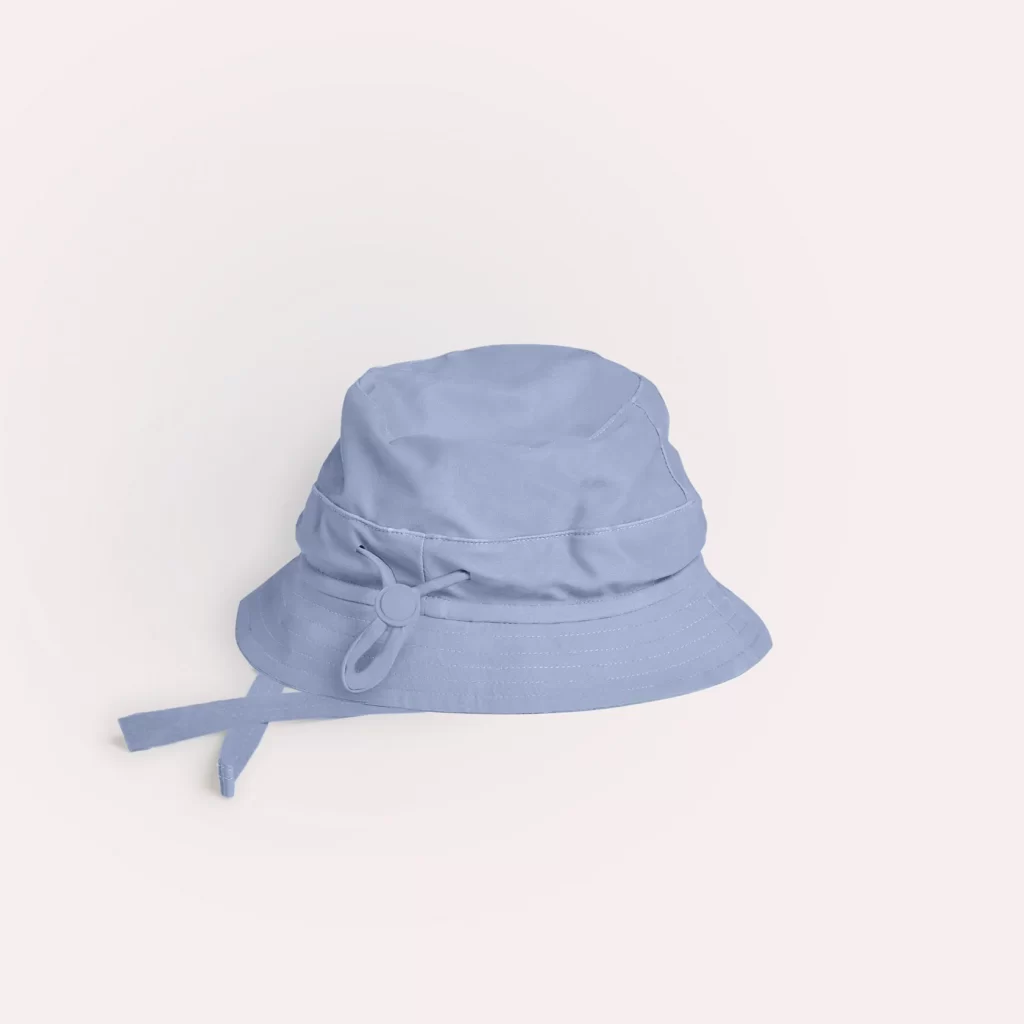
– Adjustability at the crown or with a low-profile toggle
– A stable brim that doesn’t collapse over the face when wet
– Securement that survives cannonballs: chin strap or snug elastic back
Look, a “snug fit” shouldn’t mean a pressure headache. You want secure, not tight. There’s a difference.
The style factor isn’t silly (it’s strategy)
I’ve seen the same child refuse three “sensible” hats and then wear a ridiculous shark-print cap like it’s part of their identity. That’s not a loss. That’s a win.
Let them choose the pattern. You choose the protection specs.
Even better, pick hats with:
– Fade-resistant dyes (sunlight is relentless)
– Reinforced stitching around the brim and strap points
– Flexible brims that won’t jab when they sit in a car seat or lean back in a stroller
Overly stiff brims sound good until they become a constant annoyance.
Sunscreen myths that keep parents stuck in the same cycle
“Sunscreen slips off, so why bother?”
Sunscreen works, when you apply enough, cover the obvious miss zones, and reapply. Water and towels do remove it. That’s normal. Use broad-spectrum SPF 30+, reapply every two hours, and always after swimming or heavy sweating.
The hat doesn’t replace sunscreen. It reduces the amount of skin that needs perfect sunscreen behavior.
“Sunscreen = sunblock”
“Sunblock” is mostly old terminology now. Many modern formulas are chemical filters, mineral filters, or blends, and what matters for you is: broad-spectrum coverage, adequate SPF, and realistic water resistance. A hat still beats all of it for the scalp, ears, and that sneaky neck strip where shirts gap.
A few extra sun-safety habits that actually hold up in real life
I’ll keep this tight because nobody needs a novel while packing a pool bag.
– Put the hat on before you step into the sun
– Build “shade breaks” into the day (especially 10 a.m. to 4 p.m.)
– Hydrate early, not once the meltdown starts
– Pair the brim with UV400 sunglasses if your kid tolerates them
– Keep a spare hat in the car (you’ll forget one eventually)
And one weird but real detail: reflective surfaces don’t stop at the beach. Bright pavement, pool decks, even windows can bounce UV around in ways that surprise people.
The bottom line (not a pep talk)
A good kids’ swim hat is simple equipment that prevents complicated problems. UPF 50+, real coverage, comfortable fit, and a design your child will tolerate (or better, love). Get those right and you’ll spend less time policing sun safety and more time actually enjoying the water with them.